Public Pressure, Visibility and Decision-Making in Football
Modern football is one of the most emotional and visible industries in the world, and social media has made it even more intense. In the past, many important football decisions were made behind closed doors. Club boards could discuss managers, transfers and long-term strategy with more privacy and less public noise. Today, that privacy has been reduced. Social media has created an environment in which every rumour, poor result and major decision is judged almost instantly by supporters. As a result, football leadership has become more public, more pressured and more difficult than before.
One of the biggest changes caused by social media is that decision-makers are now under constant observation. Club presidents, sporting directors and managers are no longer judged only at the end of a season. They are judged every day by digital audiences. Supporters react immediately to defeats, transfer stories, tactical choices and press conferences. This means that leaders often have to think not only about what the best decision is, but also about how that decision will be received online. In modern football, public reaction can become almost as important as the decision itself.
This creates a serious problem because healthy decision-making usually needs time, privacy and patience. A club may want to support a manager during a difficult period, negotiate carefully with a player, or make a long-term football decision that may not bring instant results. Social media often works against this kind of thinking. It rewards speed, reaction and visibility. Online, silence can look like weakness and patience can be seen as indecision. This creates an environment in which leaders may feel forced to act quickly simply to calm public pressure.
Football clubs are therefore increasingly caught between two different logics. The first is the logic of strategy, where leaders try to think carefully and plan for the future. The second is the logic of public opinion, where clubs are expected to respond quickly and visibly to fan emotion. These two logics do not always match. A decision may make sense from a football perspective, but still be unpopular online. On the other hand, a short-term decision may calm supporters temporarily even if it is not the best long-term solution. Social media has made this tension much stronger.
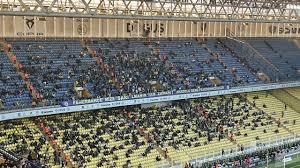
This is especially visible in countries where football identity is very strong, such as Turkey. At clubs like Fenerbahçe, Galatasaray and Beşiktaş, supporters do not simply comment as fans. They question boards, managers and transfer policy openly. Hashtags, fan pages and online campaigns can quickly shape the atmosphere around a club. In this environment, public opinion is not just background noise. It becomes a force that decision-makers are expected to manage constantly. The result is that leadership becomes more exposed and, in some cases, more unstable.
Another important issue is that social media has made people’s opinions much more visible than before. On platforms such as X, thousands of supporters can express their views instantly about line-ups, transfers, tactics and management decisions. This can be positive because fans feel more involved and clubs become more accountable. However, it can also make decision-making harder because the loudest and most emotional voices often dominate the conversation. In such cases, leaders may feel pressure to respond to online reaction rather than to follow their own long-term judgment.
This can even affect decisions on the pitch. Supporters constantly debate which players should start, who should be dropped and what the best line-up should be. In some cases, there is a public perception that managers are pushed toward selecting the players most demanded by the fanbase. Whether this is always true or not, the perception itself matters. It shows how deeply social media has entered football culture. Fans no longer wait only to judge team selection after the match. They try to influence it before the match even begins.
Another major problem is the tone of online reaction. Social media does not only make opinions more visible; it can also make them more aggressive. After poor performances, unpopular transfers or controversial line-ups, players, coaches and club officials are often exposed to insults, abusive language and organised hostility. Instead of constructive debate, online discussion can quickly become toxic. This adds another layer of pressure to already difficult decisions and creates a more unstable football environment.
A useful Turkish example is the reaction around Matias Vecino’s possible move to Galatasaray. The story became more than a transfer discussion because online opposition quickly turned it into a public issue. What matters here is not only whether social media was the single reason the transfer failed, but the fact that the reaction became so visible and politically important. Once a transfer turns into a social media battle, leaders are no longer thinking only about football quality, wages or tactical fit. They are also thinking about supporter anger, club image and the risk of appearing disconnected from the fanbase.
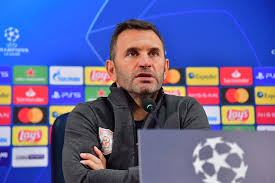
Overall, social media has changed football by making decision-making more visible, more emotional and more difficult. The private space needed for careful judgment has become smaller, while the importance of public opinion has become much greater. Football has always involved pressure, but social media has transformed that pressure into something permanent. For that reason, social media has not only changed how football is discussed. It has changed how football is governed
References
García, B. and Welford, J. (2015) ‘A “healthy” future? Supporters’ perceptions of the current state of football governance in England and the need for reform’, Soccer & Society, 16(5–6), pp. 847–869.
Ofcom (2025) Sports stars suffer impact of online abuse in real world. Available at: Ofcom website.
Özsoy, S. (2011) ‘Use of new media by Turkish fans in sport communication’, International Journal of Humanities and Social Science, 1(12).
Romero-Jara, E., Solanellas, F., Muñoz, J. and López-Carril, S. (2023) ‘Connecting with fans in the digital age: an exploratory and comparative analysis of social media management in top football clubs’, Humanities and Social Sciences Communications, 10, Article 858.

